
Liquid Hardener decoSIL Sustainable Polished Concrete
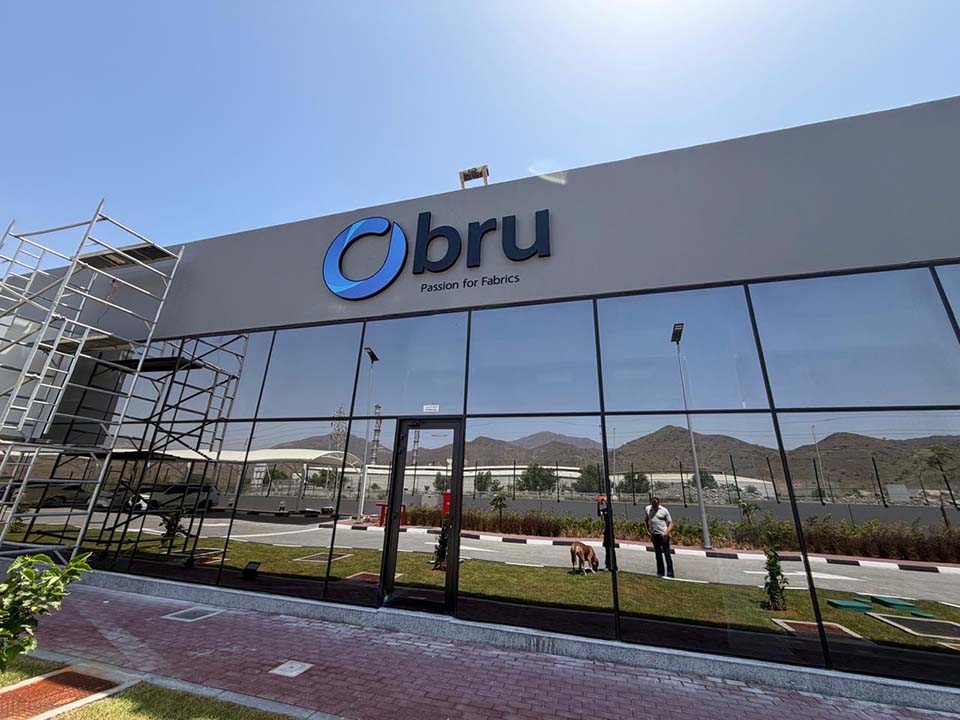
Liquid Hardener decoSIL by Deco Crete is the core treatment behind the polished concrete floor system at Bru Textiles’ new production facility in Fujairah, UAE. Formulated with lithium silicate, decoSIL penetrates deep into the concrete structure, reacts with the existing CSH matrix, and increases surface hardness by up to 30–40% without forming a surface film. No peeling, no recoating, and proven stable under the extreme thermal conditions of the UAE climate. For industrial facilities that demand long-term performance, Liquid Hardener decoSIL delivers where conventional coatings fall short.
Liquid Hardener decoSIL The Sustainable Polished Concrete Solution
When Bru Textiles, the Belgian furnishing fabric brand present in more than 100 countries, built a new production facility in Fujairah, UAE, the requirements for the flooring system were far from simple. The floor had to withstand heavy loads, continuous operation, and meet high hygiene standards under the harsh climatic conditions of the Middle East. The solution chosen for this project was TOP SHEELD, featuring two core products — Liquid Hardener decoSIL and decoFINISH sealer by Deco Crete — a lithium silicate-based hardener that penetrates directly into the concrete structure and strengthens the floor from within. This article examines the working mechanism of Liquid Hardener decoSIL, its real-world performance at the Bru Textiles project, and why it is the optimal choice for modern industrial facilities.
What Is a Liquid Hardener? How Does It Work?
A Liquid Hardener, also known as a concrete densifier, is a chemical applied directly to the concrete floor surface after rough grinding. Unlike epoxy coatings or surface sealers, Liquid Hardener penetrates deep into the concrete structure and reacts chemically with the calcium silicate hydrate (CSH) already present in the slab.
This reaction generates additional CSH crystals, filling the internal pores and capillaries of the concrete, increasing density, compactness, and surface hardness from the inside out. No film is formed on the surface, so there is no risk of peeling or delamination over time.
Core benefits of liquid hardener:
- Increases surface hardness by 30–40%
- Significantly reduces surface dusting during operation
- Improves abrasion resistance and stain resistance
- Invisible penetration — does not alter the floor’s appearance prior to polishing
- Water-based, zero VOC — safe for applicators and the environment
For high-intensity industrial facilities such as factories, warehouses, and logistics centers, the Liquid Hardener treatment step is not optional. It is the deciding factor in the longevity and quality of the entire polished concrete floor system.
decoSIL — Deco Crete’s Premium Liquid Hardener
decoSIL is Deco Crete’s flagship Liquid Hardener, formulated from lithium silicate combined with other silicates. Developed specifically for industrial polished concrete floor projects, decoSIL delivers deep penetration and fast reaction speed, meeting the demands of large-scale projects with tight construction schedules.
Learn more: https://decocrete.eu/what-is-liquid-hardener-for-concrete-floors/
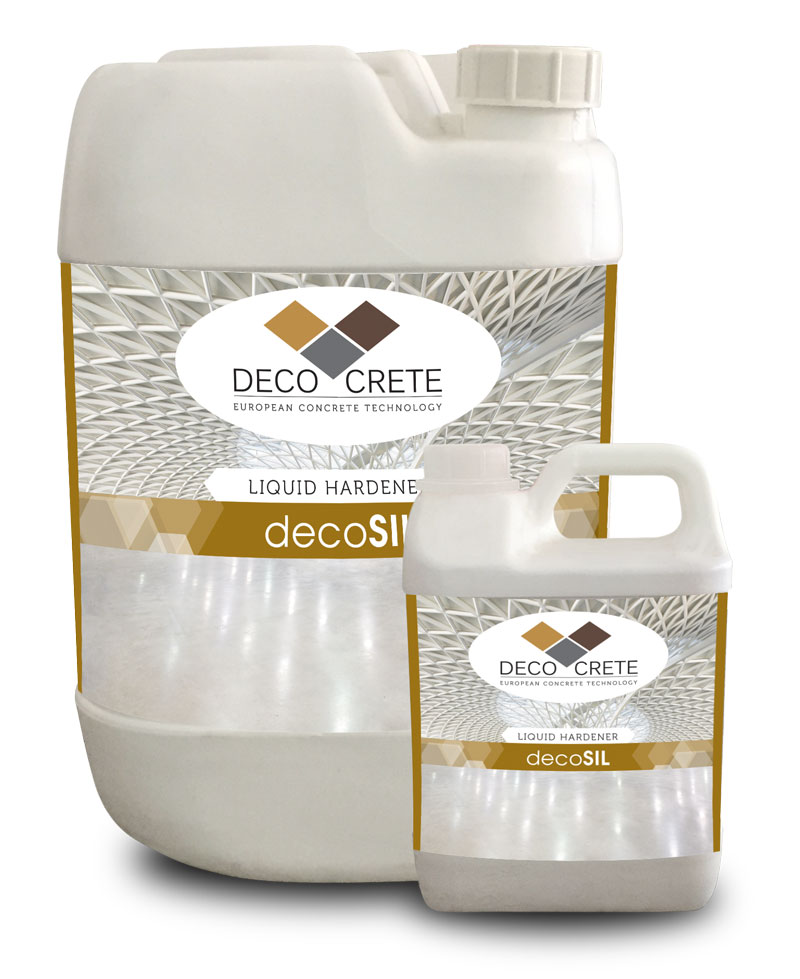
Photo 3: Liquid Hardener decoSIL
What sets decoSIL apart from conventional sodium silicate:
- Deeper penetration: decoSIL’s lithium silicate formula penetrates the concrete structure more effectively than traditional sodium silicate, reaching deeper into the substrate and reacting with a greater volume of CSH. The result is a significantly harder and denser finished surface.
- No scrubbing required after application: Conventional sodium silicate requires scrubbing and rinsing after application to remove excess residue. decoSIL eliminates this step entirely, saving application time and reducing the risk of surface contamination before polishing.
- Easier dosage control: Excess product is easy to identify and manage, making decoSIL well-suited to large-area projects requiring consistent application across thousands of square meters.
- Environmentally friendly: decoSIL is water-based and VOC-free, meeting LEED and BREEAM certification requirements, and is compatible with the green building standards of international brands.
The Bru Textiles Project in the UAE — Liquid Hardener in Practice
Project Overview
Bru Textiles was founded in Belgium and is a world-leading supplier of upholstery fabrics, curtains, and decorative textiles, serving customers in more than 100 countries. The new facility in Fujairah, UAE is one of the group’s strategic expansions to serve the rapidly growing Middle East and Asian markets.
Flooring requirements for this facility:
- Withstand continuous loads from forklifts, material handling equipment, and goods
- Endure the high temperatures and large thermal fluctuations characteristic of the UAE climate
- Maintain high hygiene standards due to direct contact with finished textile products
- Professional aesthetics consistent with the international brand image
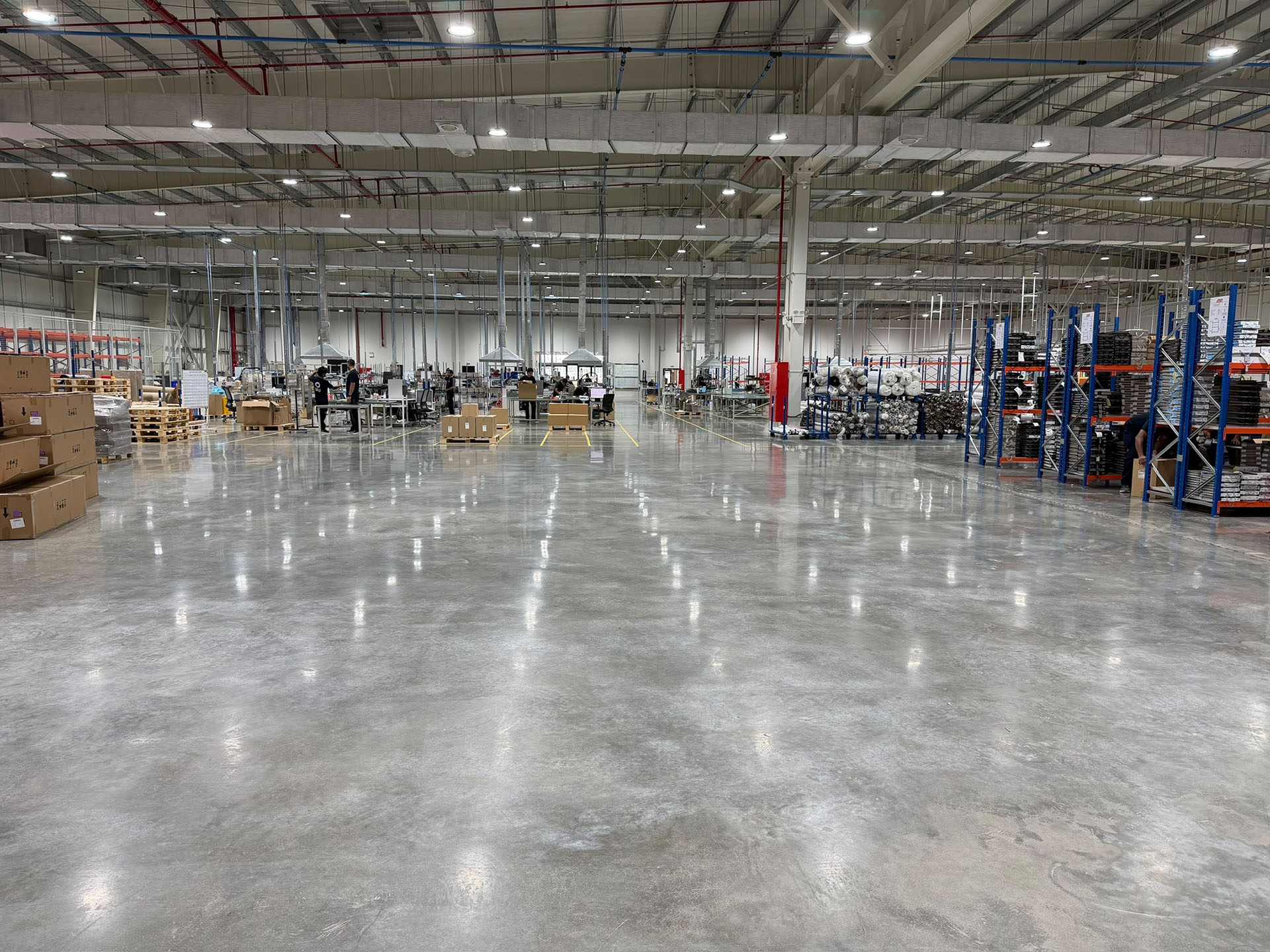
The project was executed by Deco Crete in collaboration with its Middle East application partner, Eurolit Arabia.
Why decoSIL Was the Core Choice for This Project
- The decision to use decoSIL as the Liquid Hardener treatment step in the TOP SHEELD system was driven by three practical reasons:
- Long-term durability, no recoating required: Epoxy coatings typically degrade and require reapplication every 3–5 years in heavy industrial environments. Polished concrete floors treated with decoSIL are designed to maintain their quality for 15–20 years with minimal maintenance — a significant operational cost advantage for a large-scale production facility.
- Stability under harsh climatic conditions: High temperatures and thermal expansion cycles in the UAE are a primary cause of surface coating blistering and delamination. Because decoSIL works within the concrete structure rather than forming a surface film, this risk is eliminated entirely.
- Aligned with sustainability objectives: As a European brand operating globally, Bru Textiles prioritizes environmentally responsible construction solutions. decoSIL’s water-based, VOC-free formula and its contribution toward LEED and BREEAM certification align with the group’s commitment to sustainable development.
The decoSIL Liquid Hardener Application Process Within the TOP SHEELD System
The Liquid Hardener treatment is one of the core stages in Deco Crete’s TOP SHEELD process:
- Step 1: Surface Assessment. Evaluate concrete compressive strength, flatness, and surface condition. Identify appropriate grinding levels and decoSIL dosage suited to the specific requirements of the project.
- Step 2: Surface Repair and Preparation. Use specialist repair products — decoPINFIX, decoFIX, and decoGROUT — to fill cracks, patch concrete voids, and stabilize the floor structure, creating a uniform base for the chemical penetration step.
- Step 3: Rough Grinding and Leveling. Industrial grinding machines fitted with diamond tooling remove the weak concrete layer, create a uniform flat surface, and open the pore structure of the slab, optimizing decoSIL absorption in the next step.
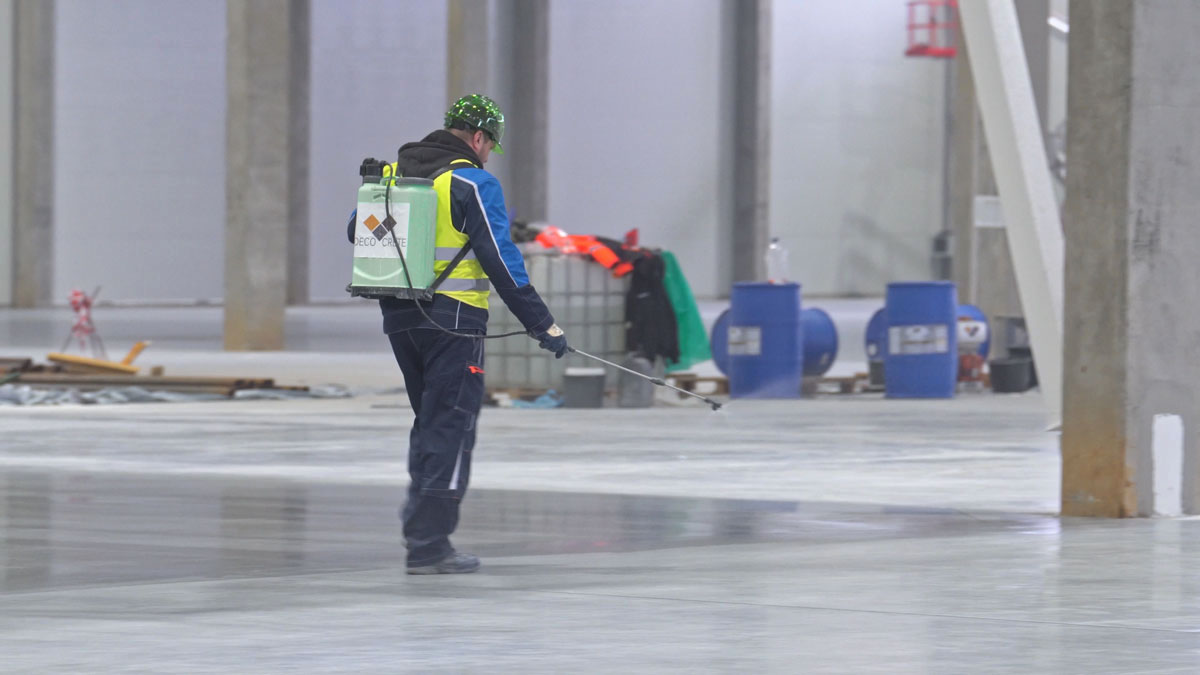
- Step 4: Application of decoSIL Liquid Hardener. decoSIL is applied evenly across the freshly ground surface. The lithium silicate formula penetrates immediately and begins reacting chemically with the concrete structure — filling pores, increasing density, and building the hard surface required for subsequent polishing steps. No scrubbing or rinsing is needed after application.
- Step 5: Fine Grinding and Multi-Stage Polishing. Once the hardener has fully reacted, the surface is polished through a progressive sequence:
- #100 → #200 → #400 → #800 → #1500
- Each stage removes the scratch pattern from the previous pass and progressively increases surface reflectivity. The final gloss level — from industrial matte to mirror finish — is selected according to the client’s requirements.
- Step 6: Protective Sealer Application. The finished surface is treated with a specialist protective sealer such as decoFINISH, enhancing stain resistance, moisture resistance, and maintaining lasting surface gloss over time.
Results at the Bru Textiles Fujairah Facility
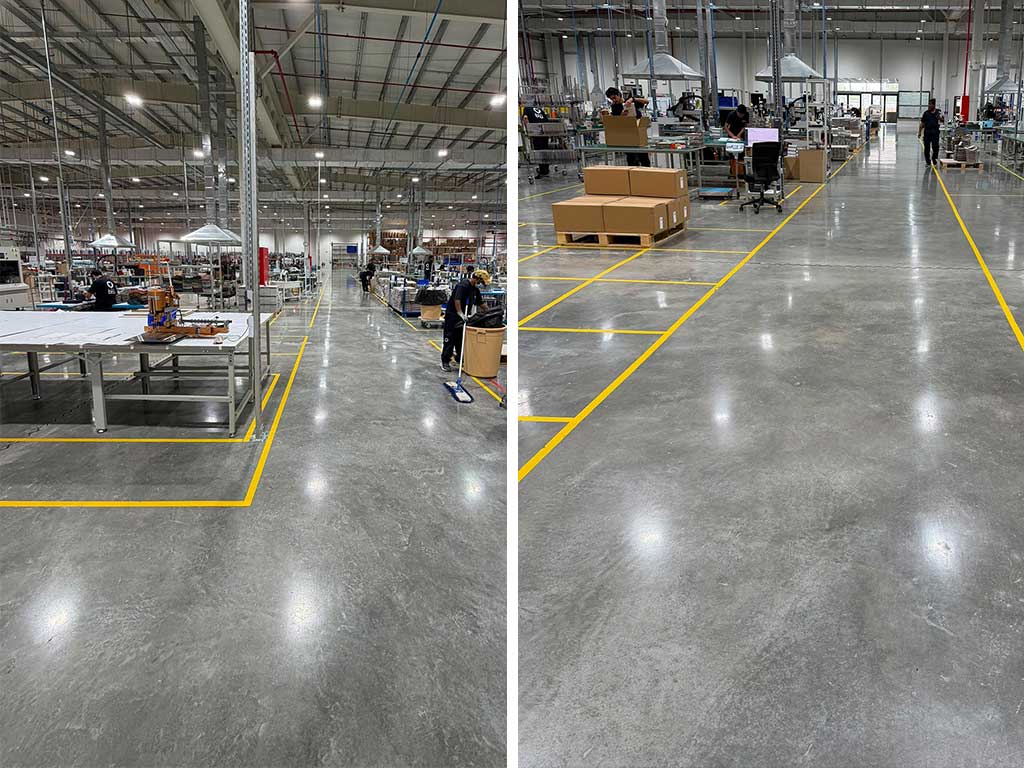
Upon completion of the TOPSHEELD system at Fujairah, the floor met all initial requirements in full:
- Hard, dense surface capable of withstanding continuous loads from forklifts and heavy equipment
- Superior abrasion resistance — no degradation after extended operation
- Reduced surface dusting, meeting the hygiene requirements of the textile industry
- Increased light reflectivity, improving working conditions throughout the facility
- No peeling, no delamination, unaffected by the extreme temperatures of the UAE climate
- Easy to clean and maintain — no specialist chemicals required
- LEED & BREEAM certified, aligned with Bru Textiles’ sustainability commitments
Conclusion
The Bru Textiles project in Fujairah, UAE is a real-world demonstration of the effectiveness of Liquid Hardener decoSIL in a demanding industrial environment. Applied correctly within the TOP SHEELD system, decoSIL not only hardens the floor surface but also establishes the foundation for the entire durability and service life of the installation — no peeling, no delamination, no periodic recoating required.
Whether you are constructing a new production facility or restoring an existing concrete floor, selecting the right Liquid Hardener is one of the most critical decisions in the process. Deco Crete’s technical team is ready to recommend the most suitable solution for your project.
Name: What is Liquid Hardener for Concrete Floors? DECO CRETE
Adress: 1484 Nguyễn Duy Trinh, P Long Trường, Tp Thủ Đức, Tp HCM
Phone: 02836366302
Website: https://decocrete.eu/what-is-liquid-hardener-for-concrete-floors/
Email: [email protected]
Tags: Liquid Hardener, Liquid Hardener application, Liquid Hardener price, Liquid Hardener densifier, Liquid Hardener application process, Liquid Hardener concrete floor densifier, Liquid Hardener coverage rate, what is Liquid Hardener